How Much Does Window Tint Cost? (2026 Pricing Guide)
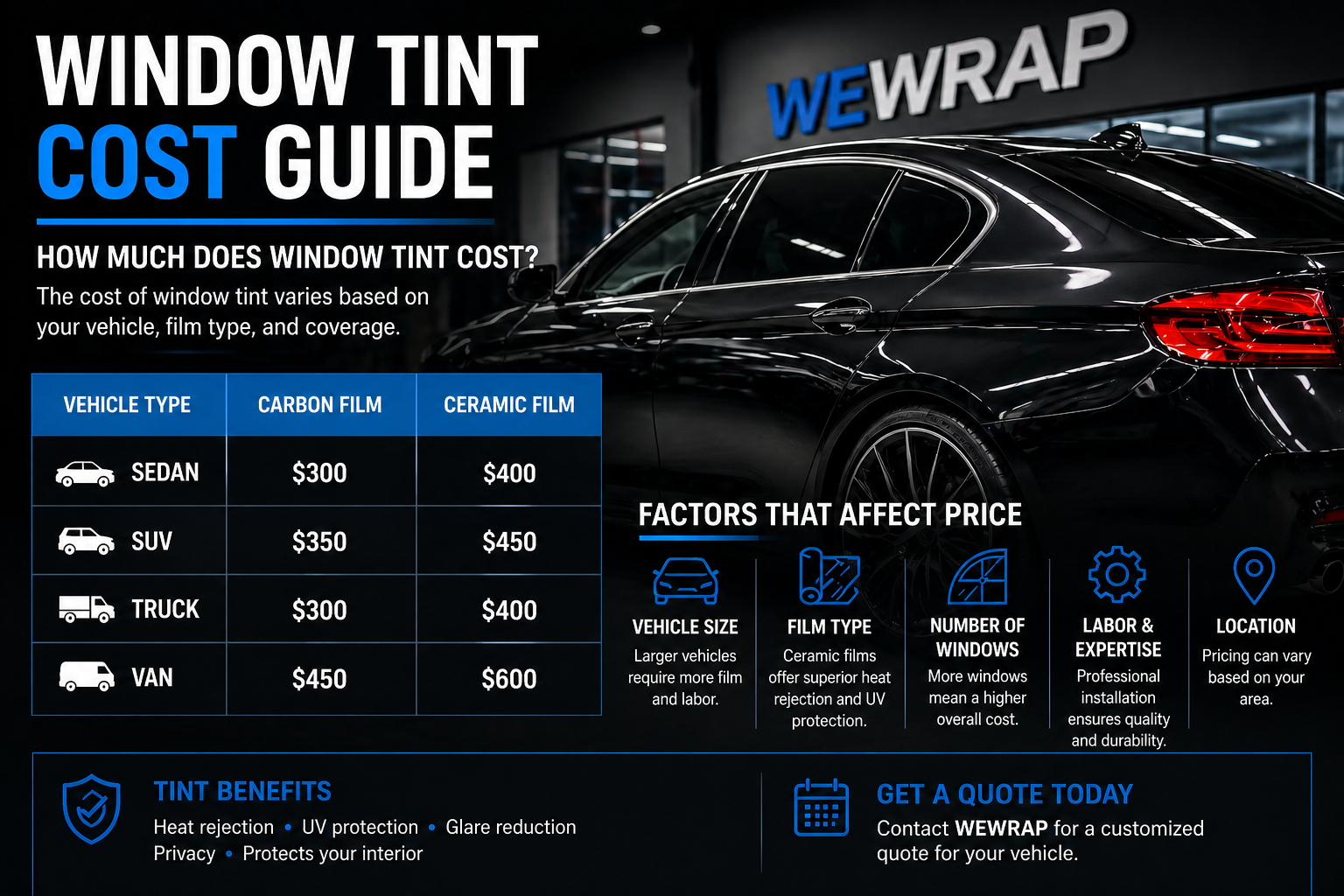
If you are asking yourself, how much does window tint cost, the answer is it depends on the type of vehicle and type of tint you select. Typically, costs range from $100 to $800 or more for high end ceramic tint.
Cheaper tint provides basic privacy and looks. Mid level tint will improve heat rejection and durability. High end tint (such as ceramic) will offer high heat rejection, good visibility and long life.
The cost is based on a few factors. Vehicle size, window count and the type of film are all factors. Installation quality also matters. A neat installation is more durable and attractive.
What You Should Expect to Pay?
Window tint is not a one size fits all product. The cost varies depending on your needs. Some want to go darker for privacy. Others want to stay cool and comfortable.
If you want window tint to keep out the heat, you will pay more. Better quality tint will block more heat and prevent fading. So less heat and a lower AC bill.
There's more to the benefits of window tint than aesthetics. It blocks glare, provides privacy and can prevent your seats and dashboard from fading. A little more in the beginning can go a long way.
What Is the Average Cost of Window Tint?
The cost of window tint varies based on the type of film you select and what it does. There are three main types of tint.
Basic Tint ($100 to $250): This is the cheapest option. This darkens your windows, provides some privacy, but does not reduce heat significantly, and can wear out.
Mid Range Tint ($250 to $500): This option offers a good balance. It blocks more heat, maintains good vision and is more durable than basic films, making it a common choice for daily use.
Premium Tint ($500 to $800+): This includes advanced films such as ceramic. It offers a high heat rejection, glare reduction and durability. It's more expensive but provides greater comfort and longevity.
What Affects Window Tint Pricing?
Many factors affect price and knowing them will help you understand what you're getting for your money.
Type of Film: Dyed films are cheaper but advanced films block heat and UV better, and are more durable, so they cost more.
Car Size: Tinting smaller cars is cheaper. On the other hand, large cars (such as SUVs and trucks) use more material and take longer.
Number of Windows: Tinting the full car costs more than doing just a few windows. This is because each panel adds to the total work.
Installation Quality: Skilled installers may cost more but offer a better look and longer-lasting results. This will surely save money in the long run.
Window Tint Percentages Explained
Window tint percentages show how much light can pass through your windows. The lower the number, the darker the tint and the less light passes through.
50% Tint: Lets in more light. It maintains the appearance of the car with some glare and heat reduction. Good if you want a subtle change.
35% Tint: A balanced option. It gives noticeable shade, better privacy, and helps with window tint for heat reduction without making it too dark.
20% Tint: Much darker. It blocks more light, increases privacy, and reduces glare, but can make night driving harder.
5% Tint (Limo Tint): Very dark. Provides the greatest privacy and heat blocking, but can be difficult to see through at night.
The tint darkness you choose should be based on your comfort and visibility requirements. It should also be well within the legal window tint limits in your area.
Types of Window Tint (Ceramic vs Regular)
There are different types of window tint available in the market. Each type varies in terms of cost, heat reduction, and longevity.
Dyed Tint: The most basic option. It improves appearance and adds privacy but offers limited heat reduction and fades over time.
Metallic Tint: Reflects heat better than dyed films and lasts longer. But it can interfere with signals like GPS and mobile phones.
Carbon Tint: A step up in performance. It blocks more heat, does not fade easily, and keeps a clean finish over time.
Ceramic Tint: The highest quality option. In the comparison of ceramic window tint vs regular, ceramic stands out for strong heat rejection, clear visibility, and long lifespan without signal interference.
If you're after comfort and long term performance, ceramic tint is often worth the extra price.
Benefits of Window Tint for Your Car
Window tint is not just for cosmetic purposes. It provides comfort and safety while driving.
Heat Reduction: Quality film helps with window tint for heat reduction by blocking a large portion of sunlight, keeping your car cooler
UV Protection: It blocks harmful rays that can damage your skin and fade your interior
Glare Reduction: Makes driving easier by reducing harsh sunlight and headlights
Interior Protection: Helps prevent seats, dashboard, and trims from cracking or fading
Privacy: Gives you a more secure and private driving experience
How Long Window Tint Lasts
The lifespan of window tint depends on the type of film and how well it is installed.
Basic tint usually lasts around 2 to 4 years before you start to see fading or bubbling.
Mid range options hold up better and can last about 5 to 7 years with proper care.
Premium films, such as ceramic, often last 8 to 10 years or even longer while maintaining clarity and performance.
If you are wondering how long does window tint last, it mostly comes down to quality. Better materials and professional installation help the tint stay in good condition for years without peeling or losing effectiveness.
Legal Window Tint Limits to Know
The window tint laws change from state to state but the basic idea is the same. Your window tint can't be darker than the law allows to keep driving safe for yourself and others.
Most rules are about how much light you need to let through your windows. The tightest limits are usually on the front windshield which often only allows a light strip at the top. The front side windows should be kept lighter so that drivers can see clearly. Rear windows have a little more leeway and can be darker in a lot of places.
It is important to check your local legal window tint limits before choosing a shade. Going too dark can lead to fines or require you to remove the tint. A good installer will guide you on what is allowed so you stay within the rules while still getting the look and comfort you want.
FAQs
How much does window tint cost for a full car?
A full car tint job can cost anywhere between $100 and $800. The final price will depend on the type of film you opt for, your car size, and the installation work done.
What is the best window tint percentage?
35% works well for most drivers. It gives a balanced mix of visibility, privacy, and comfort. This is without being too dark.
Is ceramic tint worth the cost?
Ceramic tint is worth it if you want better heat control and longer life. It costs more initially but performs better and lasts longer.
How long does window tint last?
Basic tint lasts a few years. A better quality tint can last close to ten years. The lifespan depends on the film type and how well it is installed.